

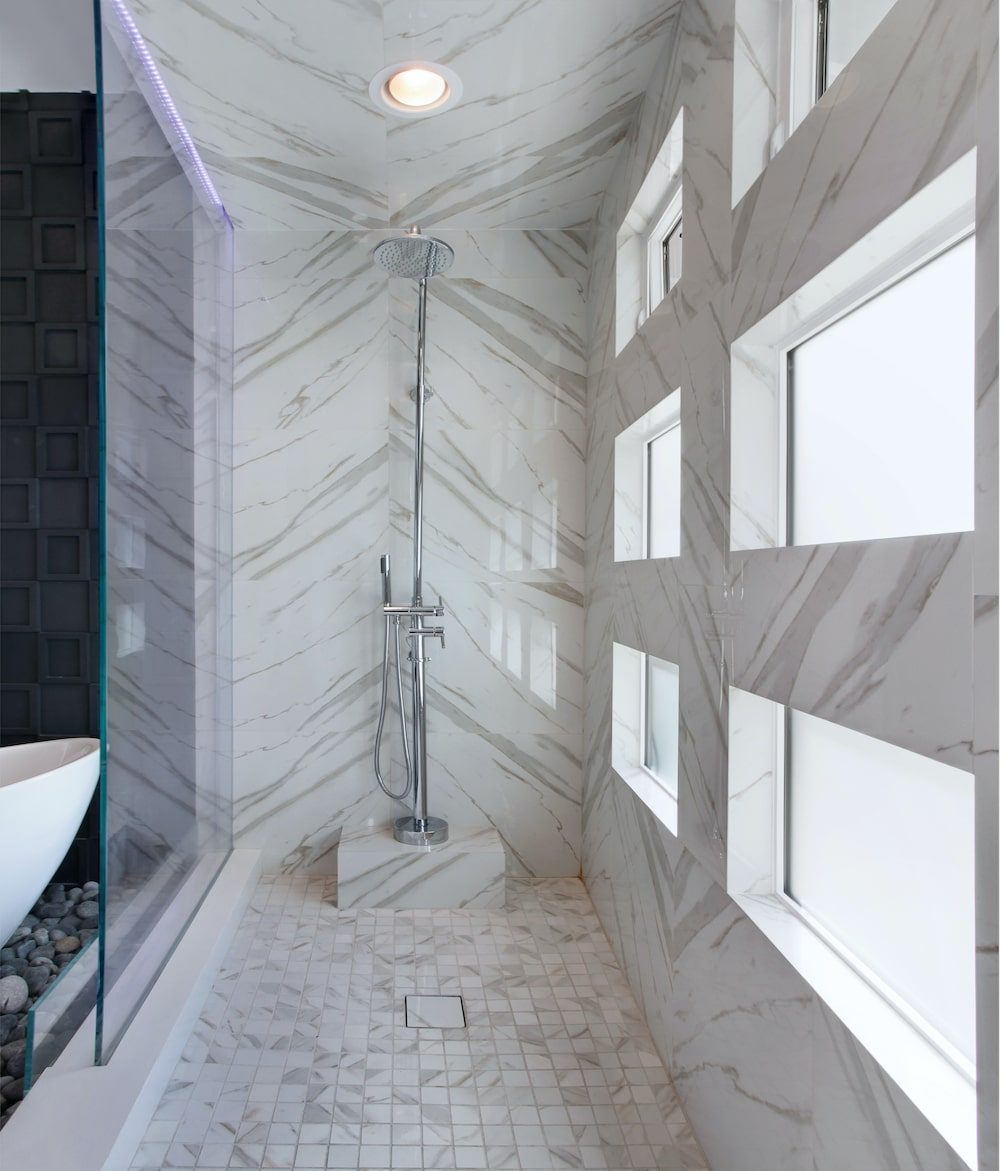
Close inspection of tile installation quality in a Greenville, SC bathroom

Guide · Greenville, SC

Nine Signs of a Bad Tile Installation

Some of these are cosmetic and you can live with them. Three of them mean water is already getting where it should not.

The clearest signs of a bad tile installation are hollow sound when you tap the tile, lippage you can catch a fingernail on, grout lines that change width, cuts landing in the most visible place, and grout that keeps cracking in the same spot. The last of those usually means water is already behind the tile.

How do I know if my tile was installed badly?

Tap across the tile with a knuckle or a coin. A solid sound means the tile is bonded; a hollow sound means there is a void under it. Then run a fingernail across the joints — if it catches on the edge of the next tile, that is lippage.

  • Hollow sound when tapped — incomplete mortar coverage, and the tile will crack eventually
  • Lippage — one tile sits proud of the next; a trip hazard on floors and visible on walls
  • Grout lines that change width across a run — the layout was never squared
  • Cuts landing at eye level or at the room entry instead of in the least visible place
  • Grout cracking at the corners and changes of plane — should be silicone, not grout
  • Grout cracking in a straight line across the floor — a missing movement joint
  • Tile running straight into the shower pan with no waterproofing transition
  • Sloped shower floor that ponds water instead of draining
  • A musty smell, or soft drywall on the other side of the shower wall
Which of these are cosmetic and which are serious?

Lippage, uneven grout lines and badly placed cuts are workmanship problems you can live with. Hollow tile, cracking that recurs after repair, ponding water and any smell or soft drywall are failures — water or movement is already at work behind the surface.

The dividing line is whether the problem is on the surface or under it. Surface problems annoy you. Substrate problems get worse and cost more the longer they run.

What should I do if my tile installation is failing?

Get it looked at before you pay for a cosmetic repair. Regrouting a shower whose waterproofing has failed hides the leak for a season and changes nothing about the cause.

We are called to redo failed installations regularly across Greenville, Taylors and Greer. We will come look, tap-test, take moisture readings and tell you plainly whether what you have is cosmetic or structural — including when the answer is that it is fine and you should leave it alone.

Can a bad tile installation be repaired, or does it need to come out?

Cosmetic problems can sometimes be improved in place. A bonding failure or a waterproofing failure cannot — those need the affected area opened, because the problem is under the tile and nothing applied on top of it reaches the cause.

We would rather tell you a repair will not hold than sell you one we know will fail. That conversation costs us the small job and is the reason we get the large one later.

Cosmetic vs. structural — how to read what you are seeing
What you seeLikely causeSeverity
Lippage between tilesSetting technique, uneven substrateCosmetic
Grout lines vary in widthLayout not squared at the startCosmetic
Cuts at eye level or the doorwayNo dry layout before settingCosmetic
Hollow sound when tappedIncomplete mortar coverageWill fail — plan to redo
Straight-line crack across a floorMissing movement joint or subfloor deflectionStructural
Grout keeps cracking after repairMovement, or water behind the tileStructural
Water pools on the shower floorPan not sloped correctly to the drainStructural
Musty smell, soft drywall, ceiling stainWaterproofing has failedUrgent

Who does the work

Written by the team at Tile with Style, a family-owned tile installation business working in Greenville, SC since 2011. Work is carried out by Javier Rincón and his crew, in English and Spanish.

Updated:

Related questions

Straight answers, no runaround

Recurring grout cracks mean movement or water, not bad grout. At corners and changes of plane the joint should be flexible silicone rather than grout. A straight-line crack across a floor points to a missing movement joint or a subfloor that flexes.

It means there is a void between the tile and the substrate because the mortar coverage was incomplete. The tile is unsupported at that point and will crack under load. It is not repairable from the surface.

That is between you and your contract, but document it thoroughly first: photograph the problems, note the dates, and get an independent assessment of whether it is cosmetic or structural. We do assessment visits and will put what we find in writing.

Yes, regularly. Redo work is a significant part of what we do across the Upstate. We open the assembly, show you what was behind the failure, and rebuild it correctly.

Free Estimate

Want a real number for your project?

Estimates are free, written, and given after we have actually seen the space — not guessed from a square-footage number over the phone.

Free Estimate

Ready to tile it with style?

Tell us about your project and we will get back to you within one business day with a free, written estimate. Prefer to talk? Call — we answer, in English or Spanish.

(864) 205-3723contact@tilewithstylesc.com
Mon – Sat · 8:00 AM – 6:00 PM
Serving Greenville, SC and the Upstate — Simpsonville, Greer, Mauldin, Five Forks, Taylors, Travelers Rest and Fountain Inn.

We reply within one business day. Hablamos español.

Call (864) 205-3723